
Hardware-in Loop(HIL) Testing- TMCS
Understand Benefits and Features of Hardware-in-the-Loop (HIL) Testing Key Benefits Of HIL Testing: Without spending the time and money on…
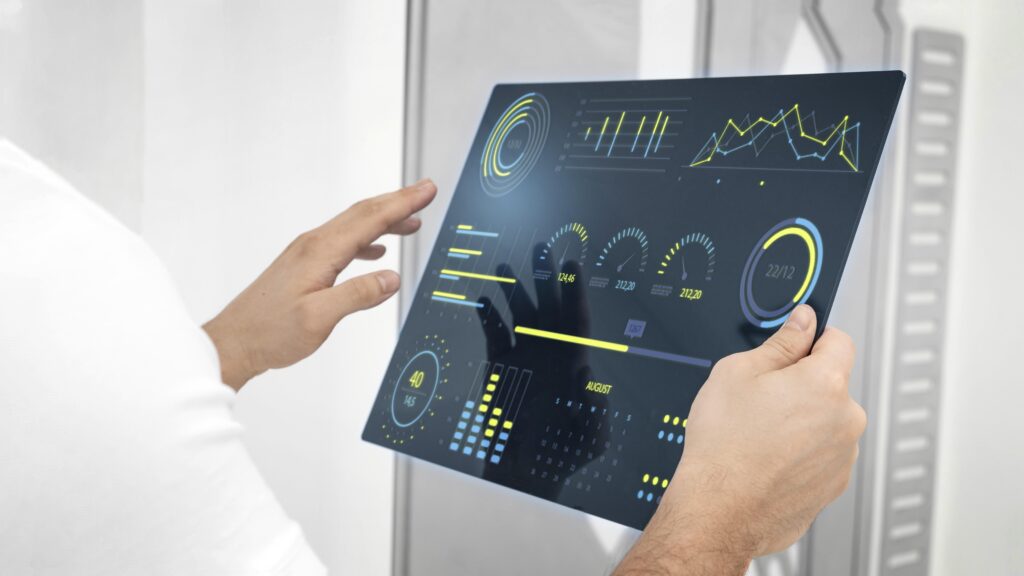
Data acquisition is an emerging platform in the advanced industrial and research arena which is likewise referred to as data monetisation. It includes the automotive test stage where data is collected on the engine performance, the environmental laboratory where data is collected to investigate if pollution is occurring, and the aerospace telemetry data analysis stage where telemetry data is processed to track the reliability of systems.
TMCS has the NI LabVIEW program, which enables visual programming through a graphical interface. It is very good at making and improving data acquisition systems (DAQs). So how does it do that? Let’s get into it.
A Data Acquisition System (DAQ) is a configuration that collects, processes, and analyzes real-world data from physical sources such as sensors, instruments, and machines. The main aim of a DAQ is to convert analogue signals (tem-erature, pressure, vibration, voltage) into digital formats that can be processed to obtain insights.
Industries and research centres utilise DAQs for precision, automation, and decision-making. DAQs enable everything from vehicle crash testing to drug discovery laboratory experiments which guarantee the accuracy and effectiveness of data gathering through this method.
What is NI LabVIEW?
The NI LabVIEW (National Instruments Laboratory Virtual Instrument Engineering Workbench) is a visual programming language that engineers and scientists can use. Unlike the traditional text-based coding style, LabVIEW allows users to create “virtual instruments” by linking functional blocks on a graphical user interface. At TMCS, we enable industries with solutions that utilise LabVIEW’s programming to streamline overall data acquisition systems.
LabVIEW provides the tools to link the range of data acquisition hardware offered by NI through a single logical connection, regardless of whether the connection is USB, PXI, or CompactDAQ. Also custom builds and third-party components can be used by the engineers without worrying about compatibility issues because all parts are supported by the LabVIEW connection.
Simple coding (that is uncomplicated) is the way to go! With the graphical programming tool used in LabVIEW, you can avoid any problems with syntax and let non-programmers design such complex applications of DAQ easily.
LabVIEW is known for its ability to process data streams in real-time, such as updating LED displays or measuring signals, and providing graphical output without any extra action on the user’s part. The use of LabVIEW ensures that the real-time feedback process occurs irrespective of whether it is hardware or software that is involved, be it vibrational levels in the car or the signals.
LabVIEW is applied in the testing of electric vehicles (EVs). It is best used in the application of a battery cycle testing system that can be linked to a plugless power supply that measures the energy consumed by the ECI.
LabVIEW is crucial for the acquisition, processing, and use of the data required for aerospace applications, from flight simulations to satellite telemetry, besides.
LabVIEW is essential to manufacturers for quality control, predictive maintenance, and automation in production.
With the use of LabVIEW, pipeline pressure monitoring, leak detection, and drilling operations optimisation can be performed.
LabVIEW assists medical researchers in bio-signal analysis, drug formulation testing, and patient monitoring.
LabVIEW can easily be scaled from simple sensor data collection to larger enterprise automation where sensors are only one part.
It processes large amounts of data at a very high speed which is ideal for applications like robotics and automated testing where speeds are essential.
No specialized expertise is required to understand it—scientists and engineers can develop applications without extensive programming knowledge.
LabVIEW is a platform providing tools for the reliable recording, secure storage, and easy recovery of information for detailed analysis.
LabVIEW makes it possible to process large datasets effectively thanks to its advanced memory management and data compression technologies.
With a strong emphasis on interoperability with hardware systems of varying designs as supported by a number of diverse protocols and drivers, LabVIEW offers real smoothness of data transmission.
Enhancing productivity and efficiency in the long run may demand quite a bit of money upfront, however, the value of LabVIEW accelerates the time-to-market, as well as the rate at which high-quality products are introduced, providing substantial savings through automation.
Automation is expected to rise, edge computing, and AI-driven analytics will be assimilated into DAQ systems.
NI is integrating ML and AI features into LabVIEW, which will help the user make accurate predictions and make the most appropriate decisions through intelligent processes.
NI LabVIEW has transformed the whole data processing business in various industries. Its graphical interface, real-time processing, and broad compatibility with various hardware types have made LabVIEW a robust tool for both engineers and researchers. The fact that LabVIEW will be at the centre stage of data acquisition trends leading to innovation and efficiency can be largely attributed to its adaptability to the market.
Understand Benefits and Features of Hardware-in-the-Loop (HIL) Testing Key Benefits Of HIL Testing: Without spending the time and money on…
The Importance of HIL Testing in Automotive Validation What is Hardware-in-the-loop (HIL) Testing? Hardware-in-the-loop (HIL) testing is the most advanced…
Role of NI LabVIEW in Modern Data Acquisition Systems Data acquisition is an emerging platform in the advanced industrial and…
Share This BLOG!
AR Bhat Bhavan, MCCIA Building, Tilak Road, Pune – 411002, Maharashtra, India.
Unit 1: Shed No. 4, Satyam Industrial Estate, Survey No. 25, Mahadev Nagar, Nanded Gaon, Singhagad Road, Pune – 411041
Toli Chowki, Hyderabad, Telangana, India – 500008
Phone +91 20 67636001
Email: sales@tmcs.in