Home/Services- High-Speed Data Acquisition (DAQ) Systems
WHAT IS DAQ?
Turn physical signals into a synchronised, analysable dataset
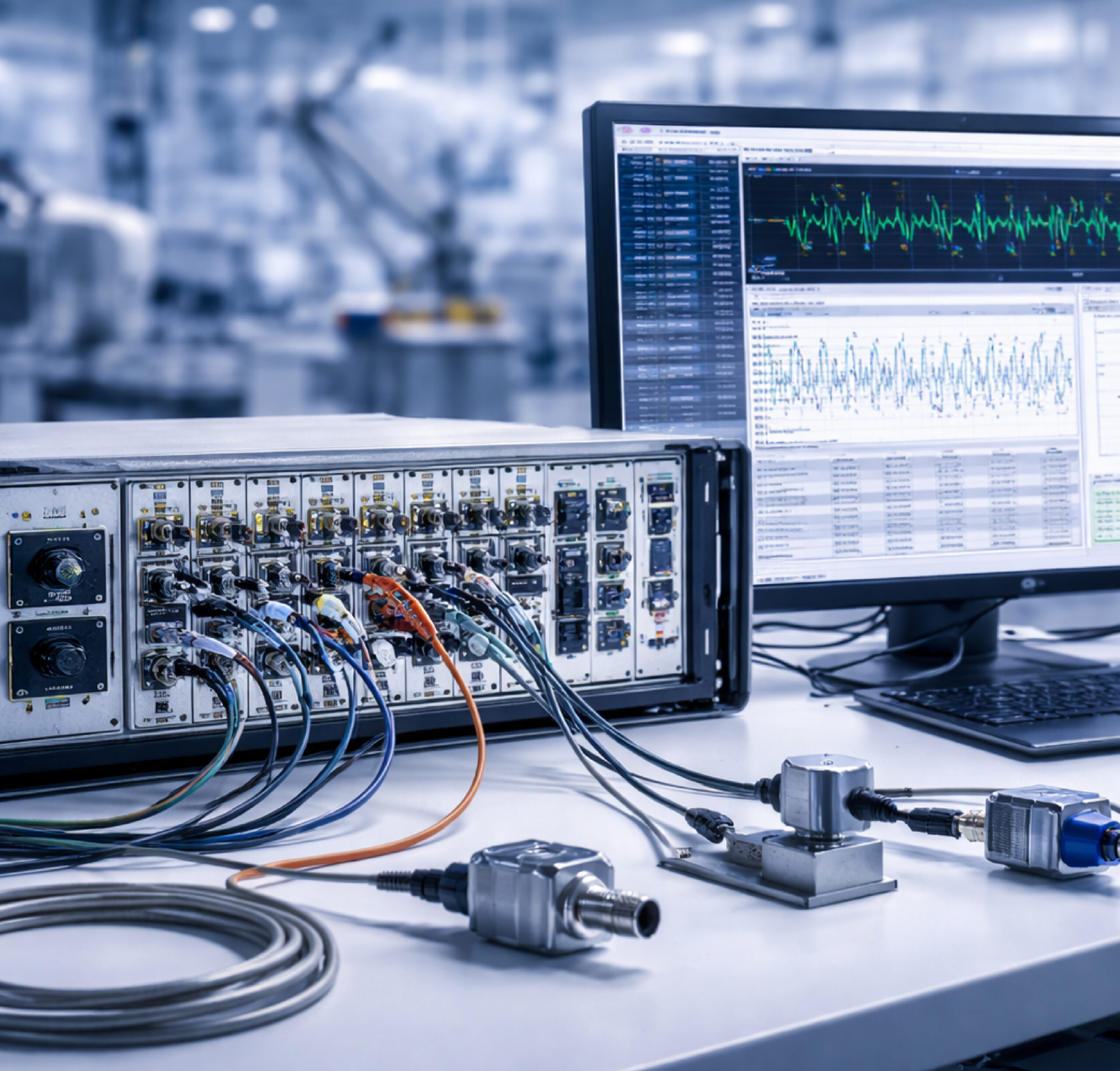
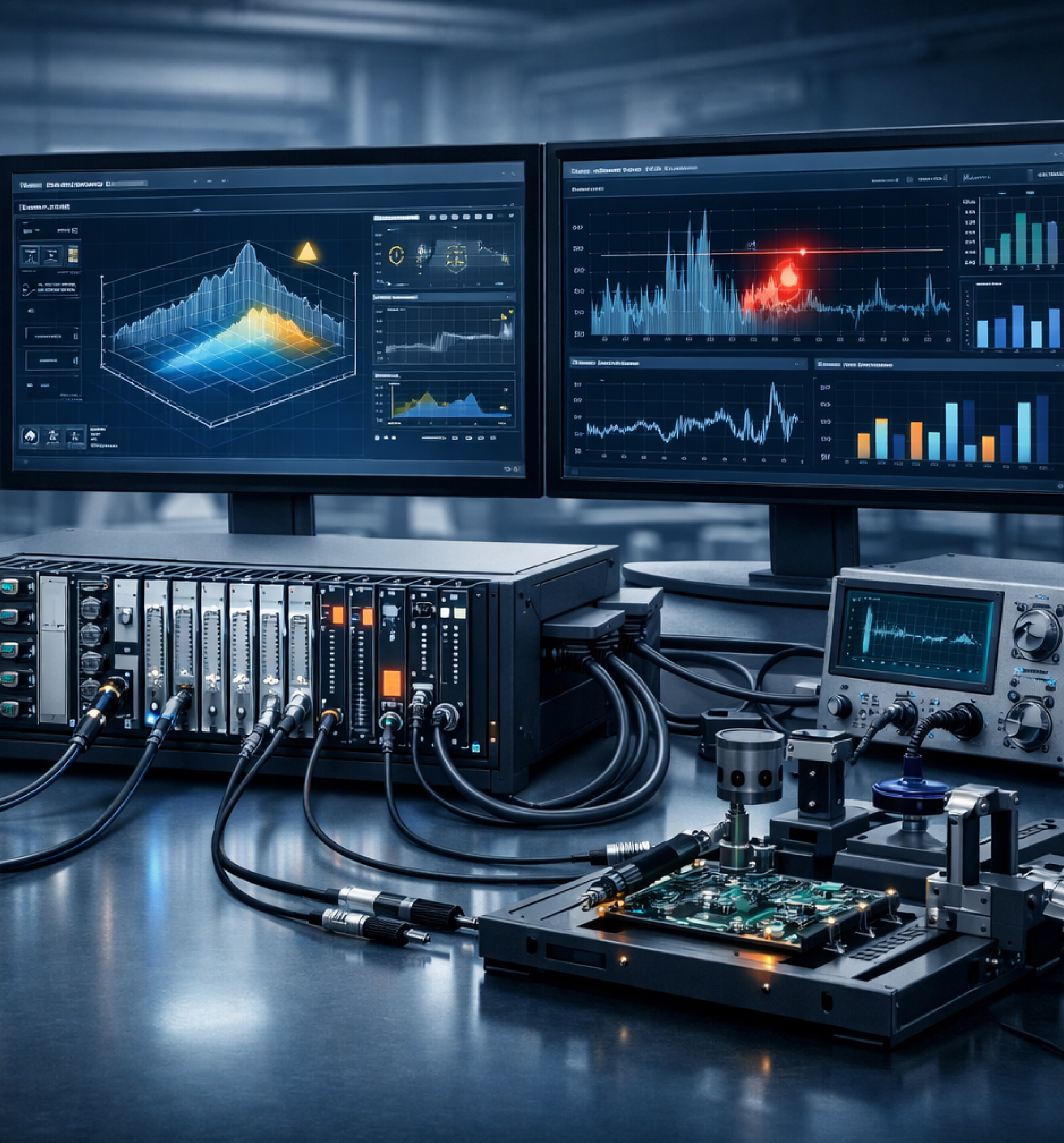
A data acquisition (DAQ) system converts physical signals — temperature, pressure, strain, vibration, network traffic — into a synchronised digital dataset an engineer can analyse, rather than a shelf of disconnected instrument readouts. Every channel is captured on a common timebase, so events on different sensors and networks can be correlated to the same instant, which is what makes a transient or high-speed dynamic event actually analysable rather than just recorded.
At TMCS, DAQ systems are built on the NI CompactDAQ and PXI hardware platform with LabVIEW for acquisition and analysis, scaling from a handful of channels in a lab setup to high-channel-count systems deployed in the field or on a production line.
Why Engineering Teams Use DAQ
Correlates every channel to a single, synchronised timebase
Captures transient and high-speed events a slower system would miss
Covers both physical signals (temperature, pressure, strain, vibration) and network traffic (CAN, Ethernet, Modbus)
Scales from a handful of lab channels to high-channel-count field deployments
Feeds directly into LabVIEW analysis and reporting, not a separate data-wrangling step
Trust & credibility
Trusted by engineering teams that depend on accurate data
TMCS has extensive experience designing and deploying data acquisition systems for product development, validation, manufacturing, research laboratories, and industrial monitoring applications.
NI Certified System Integrator
Expertise in PXI, CompactDAQ & LabVIEW
Custom sensor integration
High-speed measurement expertise
Turnkey DAQ system development
Real-time monitoring solutions
Automated reporting & analytics
Long-term support & AMC services
Why data acquisition matters
Better data leads to better engineering decisions
Whether you are validating a new product, monitoring a machine, testing a component, or analyzing system performance, the quality of your decisions depends on the quality of your data.
Aspect
Low-Speed / Single-Channel Measurement
High-Speed, Multi-Channel DAQ
Event capture
Misses fast transients between sample points
Captures high-speed dynamic events as they happen
Cross-signal correlation
Each instrument reads independently, on its own clock
Every channel shares a common timebase — signals can be correlated to the same instant
Signal variety
Typically one signal type per instrument
Temperature, pressure, strain, vibration and network traffic captured together
Root-cause analysis
Difficult to relate a mechanical event to an electrical/network event
Straightforward — both are in the same synchronised dataset
Scalability
Adding channels means adding separate instruments
Channel count scales within one NI CompactDAQ/PXI architecture
Common engineering challenges
Inaccurate measurements
Manual data collection
Missing critical events
Limited visibility into system performance
Multiple disconnected instruments
Slow testing processes
Poor data traceability
Difficult analysis and reporting
Benefits of high-speed DAQ systems
Accurate measurements
Faster testing cycles
Improved product validation
Real-time monitoring
Better troubleshooting
Automated data collection
Enhanced traceability
Improved decision making
A modern Data Acquisition system continuously collects data from multiple sensors and devices, synchronizes measurements, records events, and provides real-time visibility into system behavior.
How data acquisition systems work
Transform raw signals into actionable insights
A complete DAQ system typically includes these integrated layers. This architecture enables engineers to capture accurate measurements and make informed decisions faster.
01
Identify signals & sample rates
Define what to measure and how fast to sample it.
02
Select DAQ hardware
Match NI CompactDAQ/PXI hardware to channel count and signal type.
03
Synchronise channels
Align all channels to a common timebase.
04
Automate in LabVIEW
Automate acquisition, logging and alarms.
05
Analyse & report
Turn captured data into actionable results.
Industry solutions
Data acquisition systems tailored to your industry
BLDC Motor Drive
Enhanced BLDC drive testing throughput and accuracy by 40%