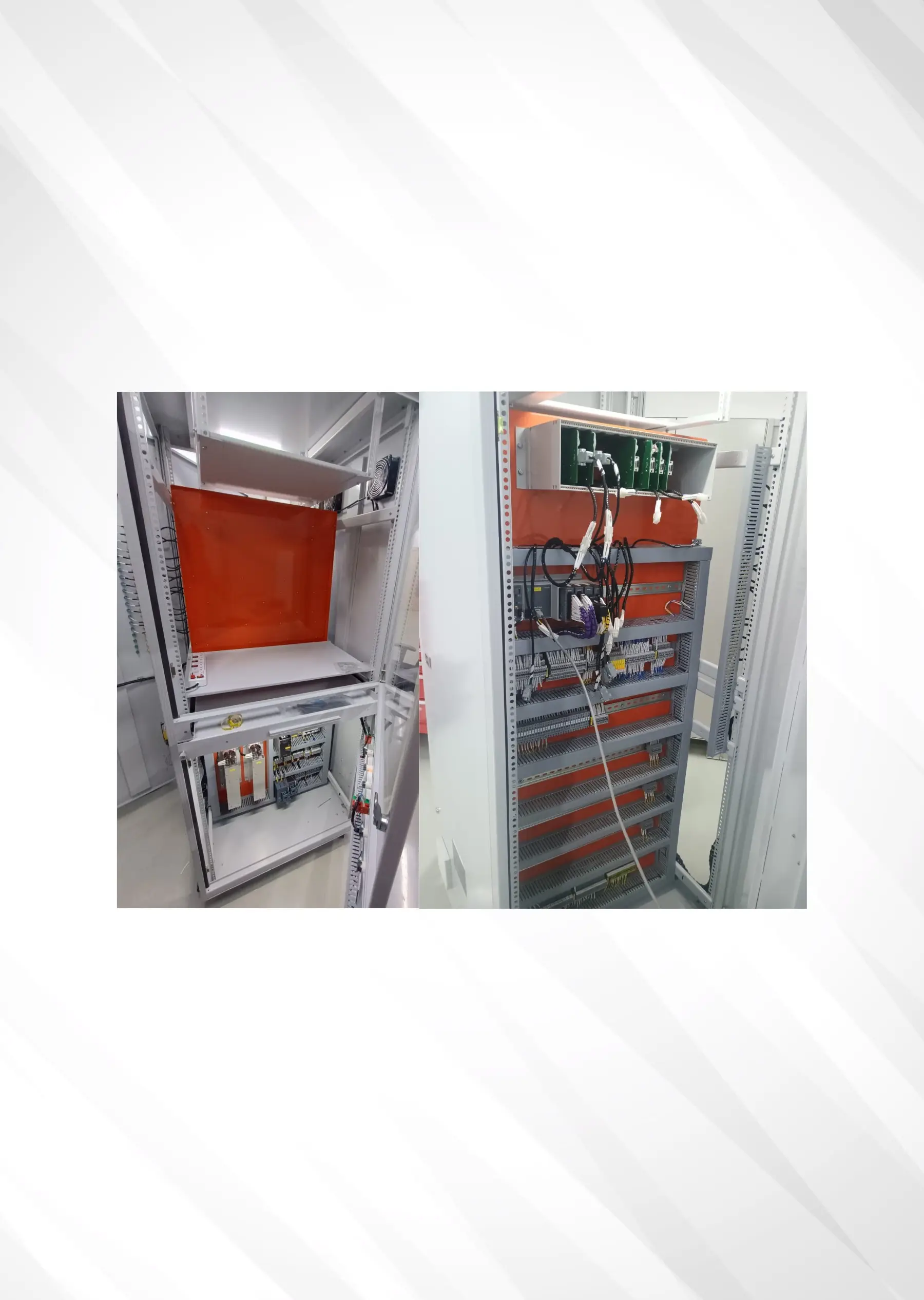
TMCS developed an NI-based HIL platform to validate Vehicle Control Units (VCUs) for electric buses. Using NI PXI, VeriStand, TestStand and LabVIEW, the platform runs real-time drive cycle and fault simulation, enabling automated, repeatable and traceable testing of performance, safety and diagnostics. Simulink integration supports safe virtual validation while reducing prototype use, test time and risk.
Author: TMCS Team | Theta Measurement And Control Solutions Pvt. Ltd.
An electric bus VCU works with many other ECUs, such as motor control, high-voltage battery, braking and
the instrument cluster, over the vehicle CAN network. Validating it on full-size prototype buses is costly and
slow, and testing faults and safety functions on a real vehicle is risky. The challenge was to simulate the
whole vehicle around the VCU, run complete drive cycles and fault scenarios automatically, and keep every
result traceable.
TMCS delivered a real-time NI PXI platform in which NI VeriStand executes vehicle models (braking,
battery, motor/drive) and CAN messages, including models brought in from Simulink. The I/O and CAN
interfaces connect to the VCU and other ECUs, and fault insertion allows electrical and communication
faults to be injected safely. NI TestStand automates drive-cycle and fault test sequences, and LabVIEW
provides the operator interface and reporting
| TEST TYPE | DESCRIPTION / PARAMETERS MONITORED |
|---|---|
|
Drive Cycle Simulation |
Runs real-time drive cycles to evaluate VCU performance
|
|
Fault Simulation |
Injects electrical and CAN faults to verify safe responses |
|
Diagnostics Validation |
Checks fault detection, reporting and diagnostic behaviour |
|
Multi-ECU Interaction |
Verifies VCU communication with MCU, battery, braking and cluster ECUs |
|
Safety Functions |
Validates VCU behaviour in safety-critical scenarios
|
| Feature | Description |
|---|---|
|
Real-Time Vehicle Models |
Braking, battery and motor/drive models in NI VeriStand |
|
Simulink Integration |
Reuses model-based development assets in the HIL loop |
|
Automated Sequencing |
NI TestStand executes test campaigns without manual intervention |
|
Traceable Results |
Logged data and reports for every test run |
|
Scalable Architecture |
Supports additional ECUs, I/O and networks |
The platform integrates NI PXI real-time hardware with NI VeriStand for model execution, NI TestStand for test automation and reporting, and LabVIEW for the operator interface. Simulink models plug directly into the real-time system, and CAN and I/O interfaces with fault insertion connect the platform to the ECUs under test.
The HIL platform provides a safe, efficient way to validate electric bus VCUs for performance, safety and diagnostics. Future enhancements may include more ECUs in the loop, additional network protocols and expanded drive-cycle and fault libraries.
AR Bhat Bhavan, MCCIA Building, Tilak Road, Pune – 411002, Maharashtra, India.
Unit 1: Shed No. 4, Satyam Industrial Estate, Survey No. 25, Mahadev Nagar, Nanded Gaon, Singhagad Road, Pune – 411041
Toli Chowki, Hyderabad, Telangana, India – 500008

Phone +91 20 67636001
Email: sales@tmcs.in