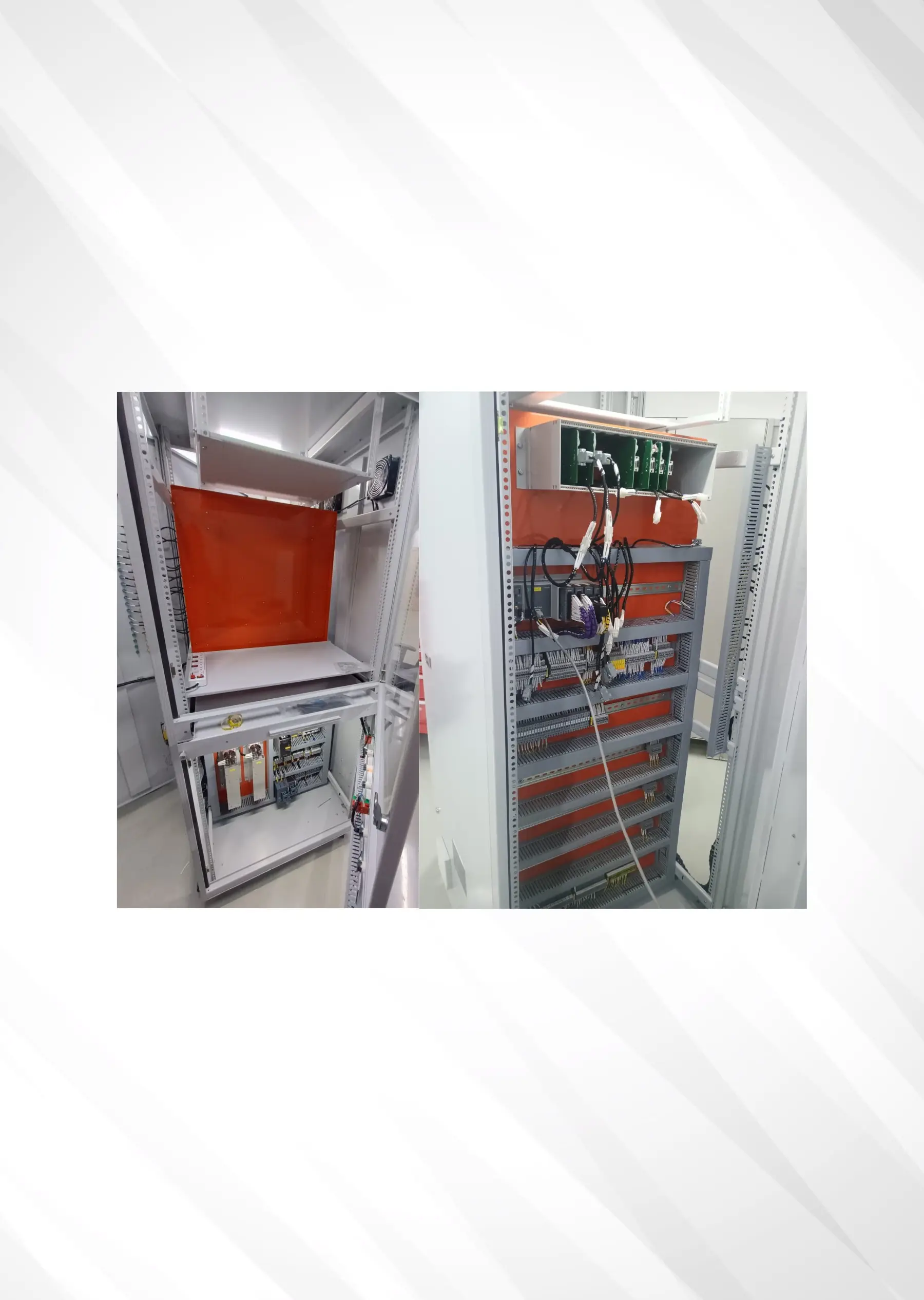
TMCS developed a Firmware HIL system for validating embedded firmware in automotive ECUs under simulated vehicle conditions. The platform uses a modular PXIe System with LabVIEW Testing, VeriStand Simulation, and TestStand Automation to enable Real-Time Simulation and Vehicle ECU Testing. It supports CAN FD Testing, LIN Communication, and multi-device interaction ensuring reliable System Validation before deployment.
Author: TMCS Team | Theta Measurement And Control Solutions Pvt. Ltd.
Automotive firmware must operate reliably across complex ECU networks with multiple communication
protocols. The challenge was to design a HIL Testing System capable of replicating real-time control behavior while validating Communication Testing, diagnostics, and signal response. The system required robust CAN FD Testing, multi-ECU integration, and automated execution to ensure repeatable Embedded Testing and accurate Network Validation.
TMCS delivered a customized Firmware HIL platform based on a modular PXIe System integrated with LabVIEW Testing, VeriStand Simulation, and TestStand Automation. The system interfaces the DUT with ECUs via CAN FD Testing and LIN Communication. Automated sequences enable Multi ECU Testing, diagnostics validation, and real-time monitoring, ensuring reliable Control Unit Testing and
comprehensive System Validation.
| TEST TYPE | DESCRIPTION / PARAMETERS MONITORED |
|---|---|
|
Firmware Functional Testing |
Validates firmware logic under simulated control conditions |
|
CAN FD Communication |
Verifies message transmission, reception, and timing
|
|
Multi-Device Communication |
Tests interaction across multiple ECUs |
|
Automotive Diagnostics |
Validates diagnostic protocols and fault reporting |
|
Signal Monitoring |
Monitors real-time response and communication behaviour
|
| Feature | Description |
|---|---|
|
Real-Time Simulation |
Control system simulation using HIL architecture |
|
CAN FD & LIN Interface |
Supports automotive communication protocols |
|
Multi-ECU Integration |
Enables testing across multiple control units |
|
Automated Test Execution |
TestStand-based sequence automation |
|
Data Logging |
Structured logging for traceability and analysis
|
The system integrates a modular PXIe System for high-speed DAQ System and signal interfacing. LabVIEW Testing is used for application development, while VeriStand Simulation enables real-time model execution. TestStand Automation manages sequencing and reporting. The platform supports CAN FD Testing and LIN Communication ensuring accurate Automotive HIL and Network Validation.
The Firmware HIL platform enables accurate Embedded Testing in simulated vehicle environments. It supports Multi ECU Testing and Communication Testing, improving validation coverage. Automated execution enhances repeatability, reduces manual effort, and ensures reliable Automotive Diagnostics while improving efficiency and reducing development time.
The Firmware HIL system provides a scalable platform for Automotive HIL and firmware validation. By combining Real-Time Simulation, communication testing, and automation, it ensures reliable System Validation. Future enhancements may include advanced diagnostics, cybersecurity testing, and expanded support for next-generation vehicle network architectures.
AR Bhat Bhavan, MCCIA Building, Tilak Road, Pune – 411002, Maharashtra, India.
Unit 1: Shed No. 4, Satyam Industrial Estate, Survey No. 25, Mahadev Nagar, Nanded Gaon, Singhagad Road, Pune – 411041
Toli Chowki, Hyderabad, Telangana, India – 500008
Phone +91 20 67636001
Email: sales@tmcs.in